|
Kits: |
Prototype Photos/Descriptions: |
|
N Scale Havelock
Baggage/Express Car Sides
(Car Sides Only - Use with American Limited Core Kit)
|
|
HO Scale GATX
Pressure-Slide "Whalebelly" HopperORDER NOW!!
Click
here for more details on these kits.
The Q Connection Ltd. Edition kit
includes a one-piece cast resin building with rough sides to
simulate the seamless concrete. The roof, door, hinges door handle,
door spring and door hook are part of the casting, all you need to
do is paint them silver. A separate roof vent, and appropriate
dimension lumber for the wire support comes with the HO version. |
In 1965, General American Transportation
Corporation (GATX), designed a new-style covered hoppers called
“Pressure-Slide” for the transporting of dry bulk material. They provided only one compartment that was pneumatically
discharged using an elaborate low pressure (50-80 p.s.i.) air ductwork
system. The unique shape
of the tank quickly led to their nickname, “whalebelly hoppers.”
Click here for more Prototype Data.
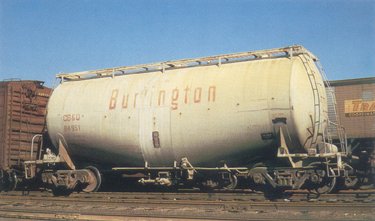
Photo: George Speir
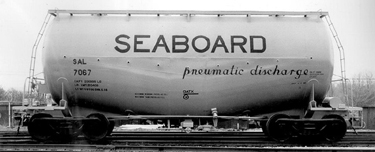
SAL Photo, Courtesy
MICROSCALE DECALS ARE
STILL IN STOCK!
|
CB&Q/BN
NE-10 Modernized Waycar
HO Scale Cast Resin Kits
SORRY, CURRENTLY SOLD OUT!
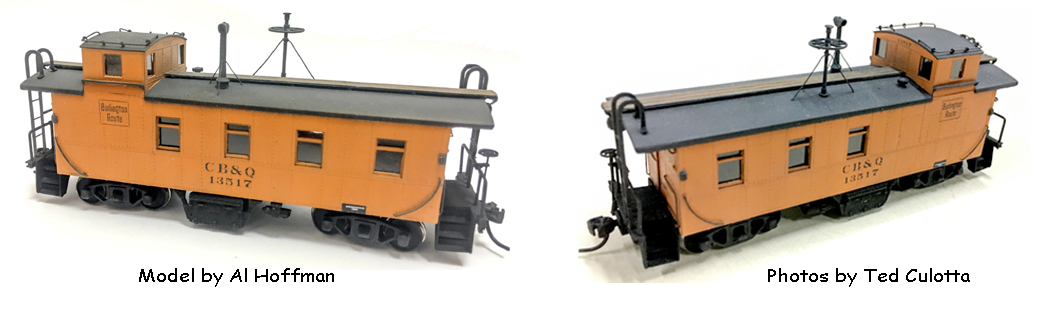
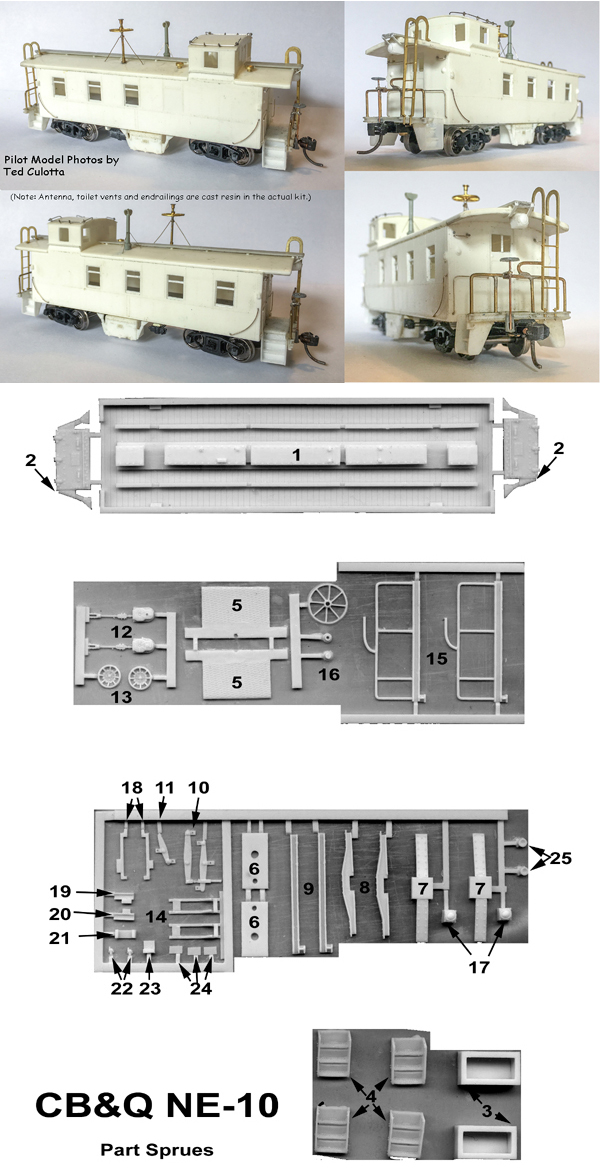
To see more images of
an assembled but unfinished kit and
cast resin parts, click here.
|
The
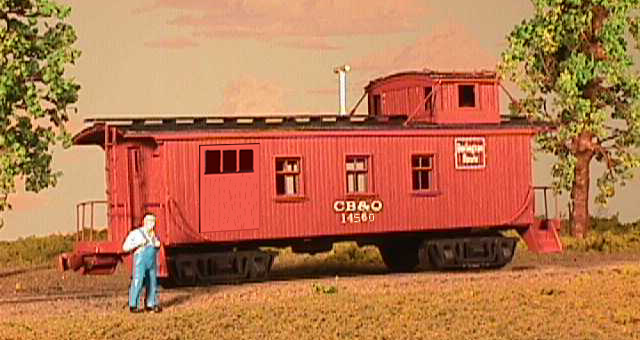
CB&Q/BN NE-10 Waycar kit is a craftsman level cast resin
kit. The kitsinclude:
- one-piece cast
resin body
- multiple-piece underframe & Tichy brake sprue
- resin castings for brake stands, end railings
- lost wax cast brass 4-rung ladders
- cast resin wood roofwalks
- Tichy metal grate roofwalks
-parts for the
wagon-wheel antenna
- brake line and hand grab wire
- Q
Connection smokejack
- 2 white metal toilet vent stacks
- Tahoe
Model Works Bettendorf Swing Motion
trucks with either standard tread
InterMountain
33" wheelsets, or Semi-scale tread InterMountain
33" wheelsets for only $2.00 more
- Kadee #178 semi-scale
whisker couplers and
draft gear are also included
(The modeler will be required to bend and install their own hand grabs
and cupola roof grab irons with the wire included in the kit.)
An added feature is a thinned area in the proper
location for the fourth window (which is blanked out on the casting)
that may be used as a guide to opening it for four windows on each side,
allowing the modeler to build the as-delivered version of this waycar. |
Massey
Concrete Instrument House in HO & N
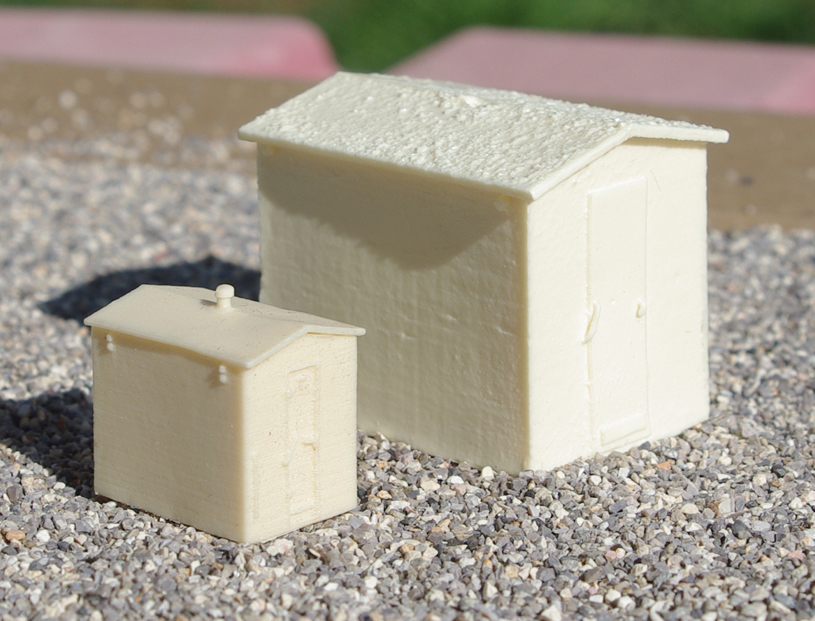
Production castings without additional parts.
| When the Burlington wanted something to
last, they had it made out of concrete! These small, yet ubiquitous
concrete instrument houses (also known as signal houses or signal
shacks) were no exception, many still serving
today on the BNSF! Used system-wide, these virtually indestructible
buildings housed electrical signal equipment and were often found
near grade crossings. Q Connection is offering a kit of the 6' 6" x
9' 6" version. 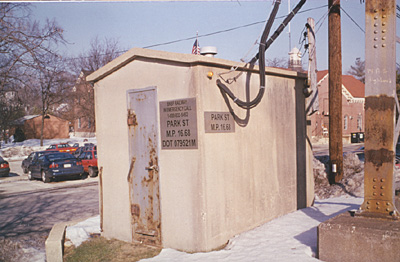
Jim Singer Photo
|
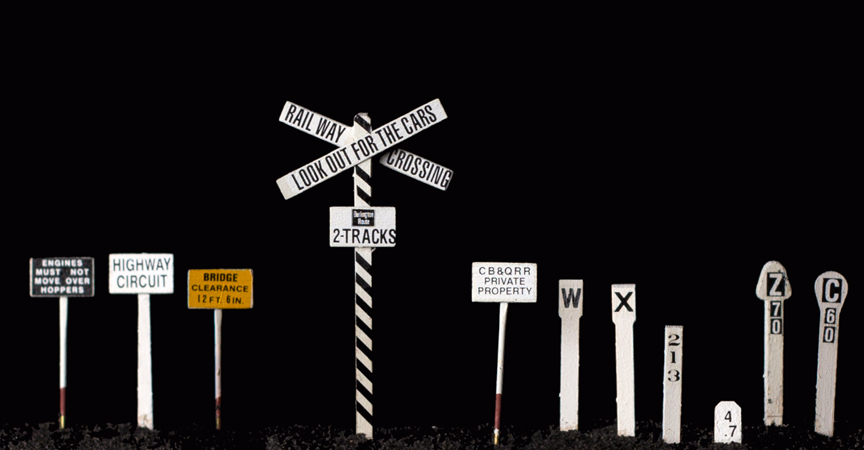
HO Signs Along
the Right-of-way
Sorry - These kits are currently unavailable due to problems with the company that laser cuts them.
|
Set makes
over 65 assorted, prototypically
correct signs!!
Included in this set:
· Custom Laser Wood Signs
· Custom Decal Sheet
· Copy of BRHS Standard Sign Data Sheet #1
For signs with metal posts, use
1/64" wire to simulate the 1 ½" boiler flue tubing .
BRHS Standard Sign Data Sheet #1 has been
reproduced with permission by the BRHS Board of Directors.
Original copies of the Data Sheet can be
purchased thru the BRHS Company Store www.burlingtonroute.com |
CB&Q HO Scale West Burlington Depot
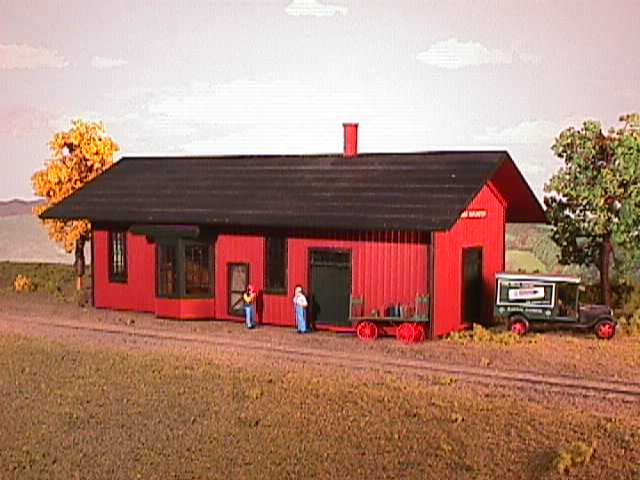
Also
available - Screen Door & Window Kit for this model....$5.95
|
CB&Q
Located on
the north side of the Chicago to Denver CB&Q Mainline, the West
Burlington Depot was one of the smallest buildings in the West
Burlington Shop complex. This depot is a standard CB&Q
design that may be found in many smaller communities along the
CB&Q. As shown below, this depot lasted well into the BN
era.
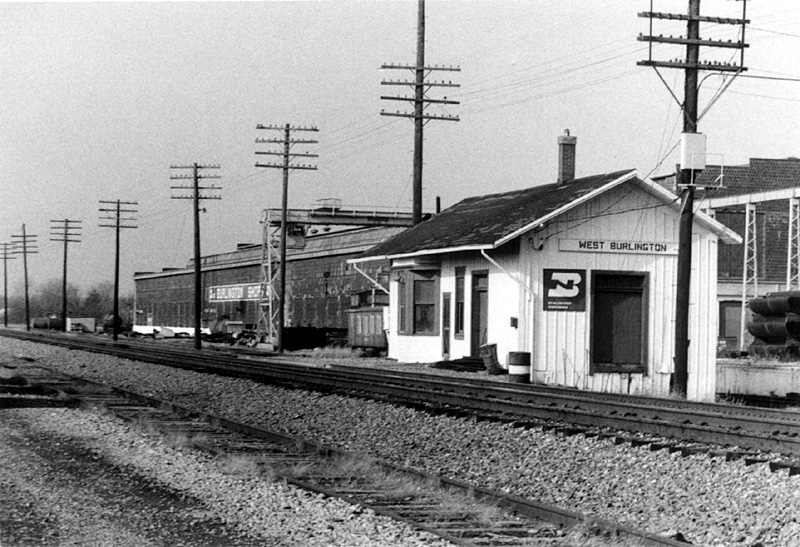
Photo by Dave Lotz
|
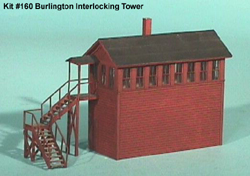
CB&Q HO Scale Wood Tower
|
Wood
Tower, located at the junction of the Burlington, Iowa to St. Louis,
Missouri K-Line and the Chicago to Denver mainline, just on the west
bank to the Mississippi River, was built in the 1882 and was
operational until the 1959. Shown here is the West side away
from the tracks.
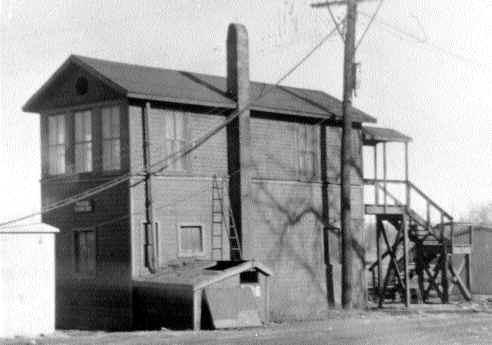
Photo Courtesy Norm Snider |
|
CB&Q HO
Scale 30' 4-Window Wood Waycar
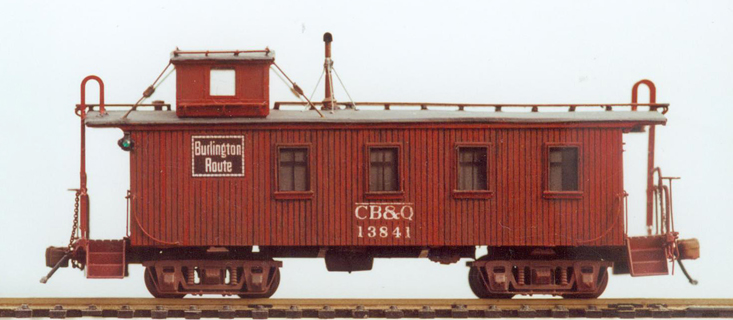
This
model represents the NE-2, NE-3, NE-6, NE-7, NE-8 and NE-9 class
waycars. Features include options to build with the older
wooden cupola or the more modern metal plated cupola, and an Athearn
floor and frame with provisions for modification.
Note:
the AMB waycar kits do not include trucks, wheelsets, couplers or
decals. We have Microscale
Decals and Finishing Kits
available to complete this model. |
CB&Q NE-4 waycar #14534 passes through Brookfield, Illinois just
prior to the BN merger in 1969. Built in the Q's Galesburg,
Illinois Shops in December of 1871, this waycar is representative of
the family of 30' 4-window wooden waycars represented by this
model.
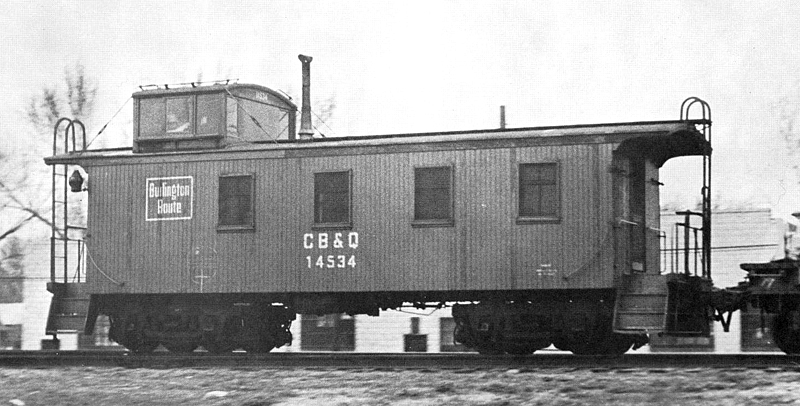
Photo by Mike
Bezin
|
CB&Q HO Scale 30' Side-Door Wood Waycar
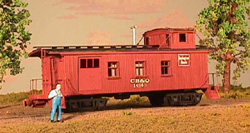
This model represents a group of NE4 class cars rebuilt by the
CB&Q with baggage doors for LCL service in the late 1950's and
early 1960's. Two different style baggage doors are included.
Kit features laser-cut parts for precise fit, modified Athearn
underframe, and white metal smokejack.
Note:
the AMB waycar kits do not include trucks, wheelsets, couplers or
decals. We have Microscale
Decals and Finishing Kits available to complete this model.
| CB&Q 28' 3-Window Wood Waycar
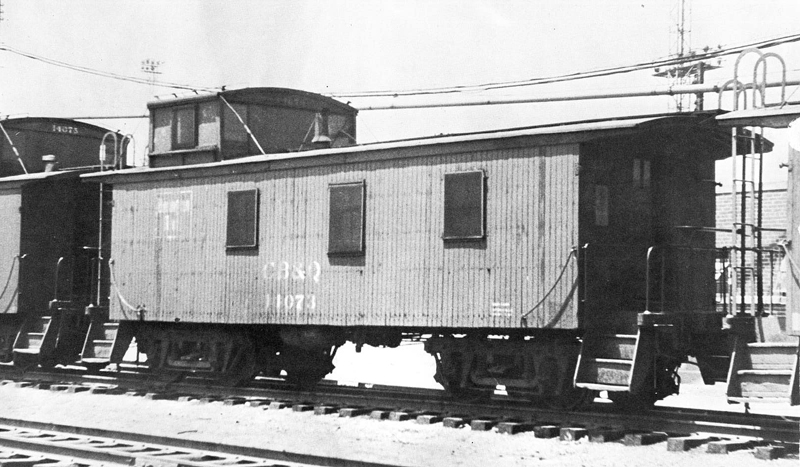
(Model Photo
unavailable)
This model represents the NE-1 and NE-4 28-foot,
three-window prototype waycars that the CB&Q owned and operated
from the 1904 consolidation until the 1970 merger. Many of these
waycars received at least one if not two rebuilds during their
lifetime. Sometime in the 1930's, the wooden end ladders were
replaced with steel, wooden underframes were replaced with steel,
and the wooden cupola sides and ends were covered with zinc
sheeting. Some of these options are included with this kit. At least
54 of the 28', three-window wooden waycars survived the BN merger
and were used for several years before being retired, most of them
gone by 1978. This 100% laser-cut wood kit also includes an Athearn
underframe, Grandt Line turnbuckles, and AMB white metal smokejack.
Note:
the AMB waycar kits do not include trucks, wheelsets, couplers or
decals. We have Microscale
Decals and Finishing Kits available to complete this model |
|
CB&Q HO Scale Dry
Closet Kits
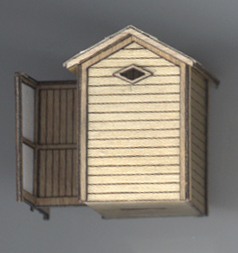
Double Compartment Assembled Kit
Copyright
© 2002-2018 Q Connection. All rights reserved.
Revised: August 21, 2018 |
Prior to the advent of
indoor plumbing, the CB&Q had many of these "Dry
Closets" AKA Outhouses, for use by customers and
employees. The Double Compartment Dry Closets were more
commonly found a passenger depots, while the Single Compartment
version could be found at many small depots These are easy kits to
assemble, requiring only one or at the most, two evenings to
complete. Please note that the kit does not include the prototypical
smell!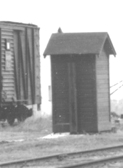
Single Compartment
Prototype |
|
HO Scale
Havelock Baggage/Express Kit
***OUT OF STOCK***
Kit includes:
-
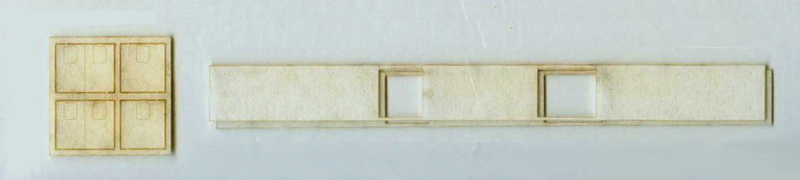
2 acrylic car sides
and 4 separate doors from American Model Builders (LaserKit).
The acrylic doors are scored replicating flush mounted windows
and are pre-masked for ease of painting. The grab iron holes are
pre drilled making installation easy!
-
1 Train Station
Products Pullman Standard Core Kit for the floor, roof, ends,
truck frames and 8 roof vents. The TSP floor and roof need to be
shortened to the correct length.
-
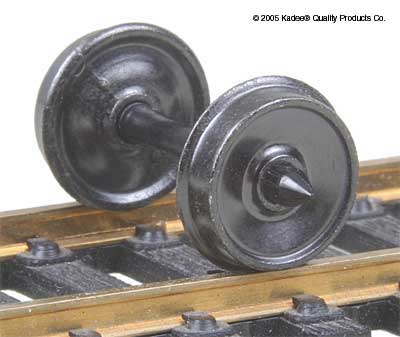
1 pair of Kadee #158
Whisker couplers (**NEW**)
-
4 Kadee #522
smooth black 36" non-magnetic metal wheels with true to
prototype accurate markings, smooth tracking, free
rolling, insulated axles with RP-25 contour
-
Assembly
instructions include a BRHS scale drawing and a list of detail parts
which you will need to purchase separately

Finished Kit sans underbody details
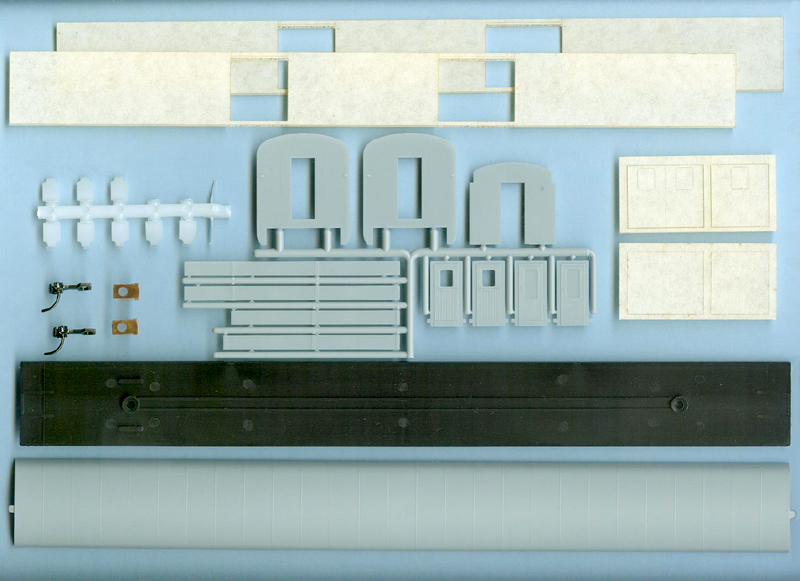
Parts included in the kit
|
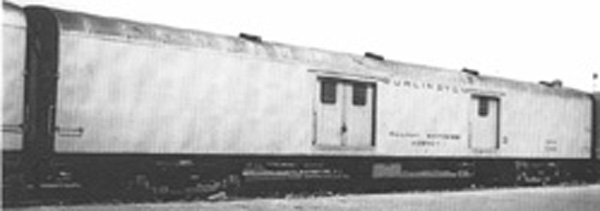
Burlington's
Havelock Economy Baggage cars were built to meet the needs of a
booming mail and express business following the end of World War
II. Closely patterned after the GN-built lightweight baggage and express cars, 273-276, the Q initially built 30 of these
cars at the Havelock, Nebraska Shops from October of 1950 through
May of 1951. Ten were fitted for Zephyr service with
electrically operated straight air brakes, painted in the
"Simulated Stainless Steel" (SSS) scheme (aluminum body
with dark gray shadow lining to simulate the fluting/corrugation of
the stainless steel Zephyr equipment) and were classed BA-19
and the other 20 were equipped for general service, painted in the
standard Pullman Green and were classed BA-19A. Another 30 of
these cars were built iat Havelock n March and April of 1952 with 10
as Zephyr-equipped, SSS painted BA-19s and the remaining 20
as general service cars in Pullman Green. By the 1960's the BA19s
all wore solid aluminum paint.
At the 1970 BN merger, 37 of the
original 60 cars remained in revenue service, with most in dead
storage. One car, Q 1036 was painted in the BN Cascade Green
and renumbered BN #7025 before the end of 1970. After Amtrak's
creation in 1971, there was no longer a need for these in passenger
service, so many of these cars ended up in BN Maintenance of Way
service, numbered in the 968000-series and 976000-series, some
retaining their old CB&Q paint, while others received a coat of
BN's boxcar red company service paint. A few even survived
beyond the BNSF merger.
|
| |
|